


I Lost Everything in 2009. Here is How I Retired Early.
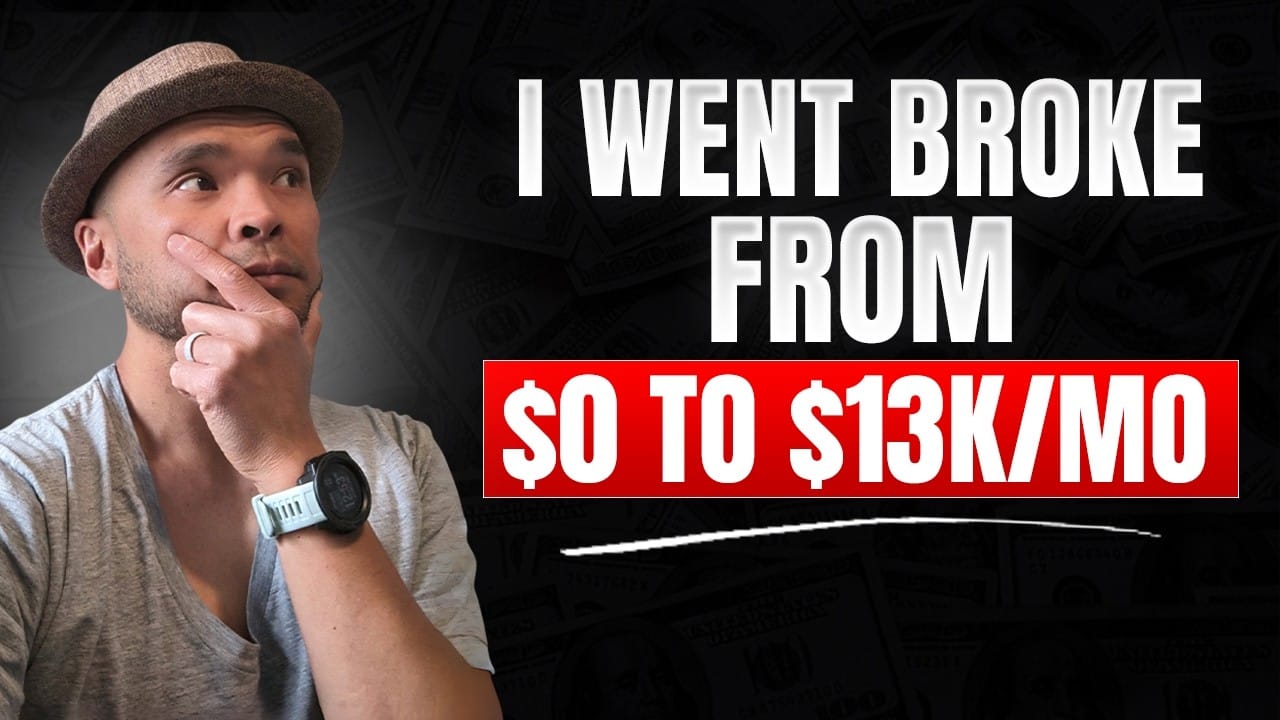
In 2009, I filed for Chapter 13 bankruptcy.
I had lost my home, my business had failed, and I owed more money than I could realistically manage. For more than five years, I made court-ordered payments of roughly $900 to $1,000 a month just to dig myself out of a financial hole I had created.
Today, I’m on the other side of that story.
I’ve retired from corporate life, built an income-focused portfolio, and now collect more than $15,000 a month in passive income. But none of that happened because I found a magic ETF or stumbled into the perfect investment. It happened because bankruptcy forced me to completely rethink debt, leverage, risk, and the role every dollar should play in my life.
How I Got There
The problems started years before the bankruptcy filing.
Back in 2006, I bought a house using an 80/20 loan structure—one mortgage for the home and a second loan to cover the down payment. That meant I had zero equity from day one. Around the same time, I started a retail business with a partner and used a HELOC on that same house to help fund it. Add in more than $70,000 in business-related credit card debt, and I was massively overleveraged before I fully understood what that meant.
Then 2008 hit.
The business failed. The housing market collapsed. I was left with multiple loans, mounting debt, and no realistic way to service it all. My business partner was able to file Chapter 7 and walk away clean. I couldn’t. I had income, I had co-signed on the debt, and I ended up filing Chapter 13 instead.
That meant five and a half years of court supervision, fixed repayment plans, and every raise or financial improvement effectively increasing what I had to pay back. By the time it was over, I had repaid roughly $80,000 to $85,000.
The Lessons Bankruptcy Taught Me
That season taught me more about money than any book, course, or YouTube video ever could.
1. Debt is a tool—not a strategy
Back then, I treated debt like a shortcut. Borrow to buy. Borrow to build. Borrow to bridge the gap. What I know now is that debt can either help you build or quietly destroy your financial life depending on how you use it. Leverage only works when the asset on the other side is producing income and the risk is controlled.
2. Optimism is not a financial plan
In 2006, I confused confidence with preparation. I was excited about buying a home. Excited about building a business. Excited about the future. But excitement doesn’t protect you when markets turn, income dries up, or debt stacks up faster than cash flow. Today, I manage risk very differently—with structure, stop losses, exit plans, and a clear understanding of what each dollar is supposed to do.
3. Cosigning can become your problem fast
One of the most expensive lessons I learned was about cosigning debt. If you put your name on it, you own the risk—whether or not you control the outcome. My partner was able to walk away from the business debt. I wasn’t. That lesson alone cost me years of payments and a massive financial reset.
4. Starting over is not the end
At the time, bankruptcy felt like failure. Looking back, it was the foundation. It forced discipline into my life. It forced me to learn how money really works. It forced me to stop treating income like something to spend and start treating it like something to deploy with purpose.
What Happened After Bankruptcy
My Chapter 13 was discharged in January 2015, but getting discharged didn’t mean everything was fixed overnight. My credit needed rebuilding. My confidence with money was shaky. I had to rebuild my entire relationship with leverage from the ground up.
By 2017, I had improved my credit and started investing in real estate again—but this time with a very different mindset. I focused on income-producing assets, not speculative bets. Over time, that grew into a portfolio of more than 30 rental units with a partner. Then, during the COVID era, I began selling properties, taking profits, and rolling that capital into the income portfolio I’m building today.
That portfolio, along with a few remaining rental properties, is what now generates the passive income that funds my life.
The Big Shift: Every Dollar Has a Job
If there’s one lesson that came out of bankruptcy and shaped everything I do now, it’s this:
Every dollar has a job.
Not a vague job. Not a “hopefully this goes up” job. A real job.
Some dollars are there to produce income now. Some are there to provide stability. Some are there to diversify risk. But every dollar in my portfolio has a purpose, and if it stops doing that job, I re-evaluate it.
That mindset is what turned my financial life around. It’s what helped me move from surviving debt payments to building a portfolio that pays me whether I’m working or not.
Final Thoughts
Bankruptcy was one of the hardest periods of my life, but it also became one of the most valuable.
It taught me that debt without a plan is dangerous, optimism without structure is expensive, and starting over is not the same thing as being finished.
If you’re in a hard season financially, I hope this reminds you that your worst chapter doesn’t have to be your final chapter. Sometimes the lesson that costs the most ends up building the future you needed most.
Book Flash Coaching Call Now.

Subscribe
Get early access to motivational emails, new content, and courses as soon as they arrive. I promise I won't send you anything else.


Contact Us
Feel free to get in touch with me at rico@riconasol.com
or book some time for us to chat by clicking here. Rico also coaches the greater Las Vegas and Henderson areas.
Open Hours
Mon - Fri: 9 AM – 6 PM
Saturday: Closed
Sunday: Closed
Location
Henderson, NV 89052
Email: rico@riconasol.com
Telephone: +1.702.900.7426

"Messy action is better than no action at all..." -Rico Nasol

Disclaimer: The Freedom Builder Bootcamp is for educational purposes only and does not constitute financial, investment, tax, or legal advice. Rico Nasol is not a registered investment advisor. All examples of specific funds or holdings are illustrations of the instructor's personal approach to his own money and are not recommendations. Investing involves risk, including possible loss of principal. Past performance does not guarantee future results. Consult a licensed professional before making investment decisions.
All Rights Reserved | Copyright Rico Nasol 2026 | Privacy Policy | Sitemap