


I Lost $12,000 on This High-Yield ETF. Would I Buy It Again?
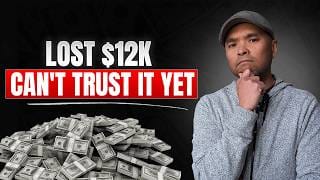
July was a reminder that a massive yield doesn't automatically mean a great income investment.
After holding GDXY for roughly four months, I exited my position with a net loss of about $12,000 - even after collecting roughly $10,000 in distributions. Since then, the ETF has bounced from its low, gold has surged, and investors have started asking the obvious question: Am I getting back in?
The answer is no, not yet.
Here's what happened, what I'm watching now, and what would need to change before I would consider GDXY again.
What Happened to My GDXY Position?
GDXY is the YieldMax Gold Miners Option Income Strategy ETF. I originally bought it in February 2026 at around $15.66 per share, when gold was performing strongly and GDX, the VanEck Gold Miners ETF, was reaching new highs.
The thesis was straightforward: use GDXY as an income accelerator. The ETF generated weekly distributions by writing call spreads on GDX, allowing investors to collect option premium from the volatility of gold miners.
But the environment changed.
Gold pulled back, GDX followed, and GDXY experienced an even sharper decline. I began selling when the fund dropped below $15 and finished exiting my position on June 7.
By the time everything was accounted for, including the distributions I had collected, my net loss was approximately $12,000. I had received roughly $10,000 in distributions, but NAV erosion more than wiped those gains out.
That's the critical lesson: a high distribution doesn't necessarily mean you're generating wealth.
Why GDXY's Structure Can Become Dangerous
One of the biggest misconceptions about GDXY is thinking of it like a traditional covered-call ETF.
GDXY doesn't actually hold gold or GDX shares. Instead, it writes call spreads on GDX to generate option income.
That distinction matters.
When GDX is volatile and moving sideways or higher, the strategy can work well. Option premiums can remain attractive and distributions can continue flowing.
But when GDX experiences a significant decline, those premiums may not be enough to offset the underlying price movement.
That's what happened to me.
There was another number that made me especially cautious: 93.62% return of capital on the most recent distribution cited in the video.
Return of capital isn't automatically bad. Some funds use ROC strategically as part of their tax structure. But when a distribution is overwhelmingly classified as ROC while the fund's NAV has also fallen dramatically, that's a warning sign worth investigating.
GDXY was already down more than 41% from inception at the time of the analysis.
For me, that combination changed the way I viewed the yield. The question stopped being, "How much is this ETF paying me?"
It became:
"How much of what I'm receiving is actually being generated by the strategy?"
Why I'm Not Buying the Rebound
Since I sold, GDXY dropped as low as $9.64 before recovering above $11.
Gold has also moved sharply higher, GDX has recovered from its lows, and headlines surrounding the Strait of Hormuz have helped change the market narrative.
It's easy to look at that rebound and think, "Maybe I sold too early."
But I'm not buying the bounce.
The problem is that GDX is a high-beta way to play gold. When gold rises, mining stocks can outperform the metal. But the same leverage works in reverse when conditions deteriorate.
That's exactly what we saw earlier in the year.
GDX fell sharply from its peak, while physical gold held up much better. GDXY, with its option strategy tied to GDX, was caught in the middle of that volatility.
A few green days aren't enough to convince me that the underlying trend has changed.
I'm looking for sustained confirmation, not a headline-driven bounce.
That means:
Energy prices staying lower for multiple weeks
Mining costs showing real improvement
AISC numbers improving in upcoming earnings
A clearer Federal Reserve rate outlook
Disinflation moving consistently toward the Fed's target
GDX beginning to outperform gold again
Miners demonstrating stronger capital discipline through buybacks, dividends, or debt reduction
If several of those factors start lining up, my view could change.
But right now, I'm watching rather than buying.
What This Taught Me About High-Yield ETFs
The biggest lesson from GDXY isn't that YieldMax funds are bad or that covered-call strategies don't work.
It's that the underlying asset matters enormously.
A covered-call strategy can generate meaningful income, but it can't magically eliminate the downside of a highly volatile underlying asset.
GDXY showed me what happens when the underlying trend becomes unfavorable.
I've become more cautious about high-yield structures when they're built around high-beta assets in uncertain markets. The headline distribution can look incredibly attractive, but the total-return picture tells the real story.
That doesn't mean I've abandoned gold.
I still believe gold belongs in a diversified income portfolio. I'm simply expressing that exposure differently.
For now, I'm using positions such as IAUI from NEOS and KGLD for my income-oriented gold exposure, while also owning GLD and other growth ETFs in my retirement accounts.
There's an important distinction here:
I'm not out on gold. I'm out on this specific vehicle for gold right now.
Final Thoughts
GDXY may have found a floor. It may continue higher from here. The recent rebound is real, and the setup is certainly more interesting than it was a couple of months ago.
But I've already experienced what happens when the trade moves against me.
I'm not willing to jump back in simply because the ETF has fallen nearly 50% from its previous high and bounced on positive headlines.
For me, the next move requires evidence.
I want to see sustained improvement in energy costs, stronger fundamentals for miners, greater clarity around interest rates and inflation, and—most importantly—miners beginning to lead gold again.
Until those pieces start coming together, I'm watching, not buying.
The bigger lesson is one I keep coming back to with income investing: don't confuse a large distribution with a large return.
Every dollar in an income portfolio has a job, and sometimes the right decision is knowing when a particular job is no longer worth the risk.
Book Flash Coaching Call Now.

Subscribe
Get early access to motivational emails, new content, and courses as soon as they arrive. I promise I won't send you anything else.


Contact Us
Feel free to get in touch with me at rico@riconasol.com
or book some time for us to chat by clicking here. Rico also coaches the greater Las Vegas and Henderson areas.
Open Hours
Mon - Fri: 9 AM – 6 PM
Saturday: Closed
Sunday: Closed
Location
Henderson, NV 89052
Email: rico@riconasol.com
Telephone: +1.702.900.7426

"Messy action is better than no action at all..." -Rico Nasol

Disclaimer: The Freedom Builder Bootcamp is for educational purposes only and does not constitute financial, investment, tax, or legal advice. Rico Nasol is not a registered investment advisor. All examples of specific funds or holdings are illustrations of the instructor's personal approach to his own money and are not recommendations. Investing involves risk, including possible loss of principal. Past performance does not guarantee future results. Consult a licensed professional before making investment decisions.
All Rights Reserved | Copyright Rico Nasol 2026 | Privacy Policy | Sitemap