


I Put $200,000 Into Real Estate. Here’s What I’d Do Differently Today.
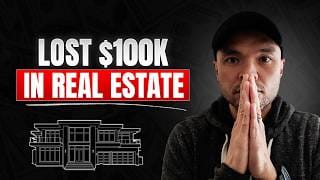
In 2018, I put more than $200,000 into a real estate partnership that eventually grew to more than 30 rental units. On paper, it looked like the kind of investment everyone wants: rental income, property appreciation, and a path to building wealth.
The reality was very different. Maintenance, taxes, repairs, property managers, tenants, and unexpected expenses slowly ate into the returns. When we eventually sold, I walked away with roughly $100,000–$150,000 from my original investment.
That experience changed how I think about investing. I'm not anti-real estate, I still own property, but today, I place much more emphasis on broad-market exposure, simplicity, and building cash flow.
The Real Cost of My Real Estate Investment
My real estate journey started in 2017, when my wife and I purchased our first rental property in Las Vegas. We still own it today, and it has been a valuable learning experience.
The following year, I partnered with friends to acquire a larger portfolio. Over several years, we accumulated more than 30 rental units, and I ultimately invested somewhere between $200,000 and $250,000.
The problem wasn't that real estate itself was bad. The problem was the complexity.
There were maintenance calls, property taxes, repairs, tenant issues, property managers, multiple locations, and constant decisions that required time and attention.
When we eventually sold the portfolio, I recovered only around $100,000–$150,000 of my original investment.
I don't regret the experience or blame my partners. It was an expensive education, but it taught me an important lesson about the difference between an investment that looks attractive on paper and one that actually produces the outcome you want.
At the same time, I was in my peak earning years as a senior executive. Looking back, I wish someone had shown me what could have happened if I had deployed that capital differently.
What $200,000 in QQQ Could Have Become
One of the biggest misconceptions I used to have was that the stock market was essentially gambling.
But owning a broad index fund is fundamentally different from betting on an individual stock. When you own something like QQQ, you're getting exposure to the NASDAQ-100 and companies such as Apple, Microsoft, Nvidia, and other major businesses.
The historical numbers tell an interesting story.
If $200,000 had been invested in QQQ in 2018 and held through the end of 2024, including the significant decline in 2022, the investment could have grown to roughly $620,000–$640,000 based on the returns discussed in the video.
That's more than a threefold increase.
And unlike the rental portfolio, there would have been no tenants, maintenance calls, property managers, leaking roofs, or unexpected repair bills.
Of course, historical performance doesn't guarantee future results. Real estate can also be an excellent wealth-building vehicle when the deal, market, financing, and management are right.
The point isn't that stocks always beat real estate.
The point is that simplicity and long-term compounding deserve a place in the conversation.
From Growth to Income
There's one problem with QQQ for someone focused on income: it produces very little cash flow.
That's where my investment philosophy has evolved.
Building wealth through appreciation is great, but eventually, I want those assets to produce meaningful income. That's why I've become interested in combining broad index exposure with an income strategy.
NEOS launched QQQI, a NASDAQ-100 high-income ETF, in January 2024. The fund provides exposure to the NASDAQ-100 while using an options strategy to generate monthly distributions.
The hypothetical framework is simple:
If $200,000 had grown into approximately $620,000 through QQQ, and that capital were eventually transitioned into an income-focused strategy generating a hypothetical 14% distribution rate, it could produce roughly $86,000 a year in distributions.
That's not a prediction or guaranteed return. QQQI didn't exist in 2018, QQQ's historical returns won't necessarily repeat, and moving between investments in a taxable account could create tax consequences.
But the underlying principle is what interests me:
Build wealth first, then turn that wealth into cash flow.
That's the framework I'm building toward today.
The Three-Bucket Strategy I'm Using
If I were starting over today—whether I was 28, 38, 48, or 58—I would focus on four principles.
First, I'd prioritize cash flow alongside appreciation. Every dollar should have a job.
Second, I'd favor broad indexes over concentrated bets. Individual stocks can have a place, but I don't want my financial future dependent on a handful of companies or speculative investments.
Third, I'd organize my portfolio into three buckets:
Income Engine: Higher-yield positions designed to generate aggressive cash flow.
Core Foundation: Broad-market income investments such as QQQI and SPYI that provide diversified exposure while producing regular income.
Defensive Assets: Positions such as gold, energy, real estate, and REITs that can behave differently across various market environments.
The final principle is perhaps the most important: start earlier than you think you need to.
Your peak earning years represent one of the most important capital-deployment windows of your life. I wish I had understood this framework when I was 38 and had significant income and capital available to invest.
But it's never too late to change direction.
Final Thoughts
My real estate experience taught me that an investment can look impressive on paper while producing very different results in reality.
More than 30 rental units sounded exciting. But the ongoing costs, complexity, and time commitment were very real. Meanwhile, broad-market index investing offered a level of simplicity and historical compounding that I didn't fully appreciate at the time.
That doesn't mean real estate is bad. I still own property, and I believe it can be an excellent wealth-building tool.
What changed is my framework.
Today, I'm focused on broad-market exposure, income generation, diversification, and making every dollar serve a purpose.
If I could go back to my peak earning years, I would have spent more time understanding how compounding, index investing, and income strategies could work together.
You don't get to go back and redeploy yesterday's money.
But you can decide what to do with today's.
The best time to plant the tree may have been ten years ago. The second-best time is today.
Book Flash Coaching Call Now.

Subscribe
Get early access to motivational emails, new content, and courses as soon as they arrive. I promise I won't send you anything else.


Contact Us
Feel free to get in touch with me at rico@riconasol.com
or book some time for us to chat by clicking here. Rico also coaches the greater Las Vegas and Henderson areas.
Open Hours
Mon - Fri: 9 AM – 6 PM
Saturday: Closed
Sunday: Closed
Location
Henderson, NV 89052
Email: rico@riconasol.com
Telephone: +1.702.900.7426

"Messy action is better than no action at all..." -Rico Nasol

Disclaimer: The Freedom Builder Bootcamp is for educational purposes only and does not constitute financial, investment, tax, or legal advice. Rico Nasol is not a registered investment advisor. All examples of specific funds or holdings are illustrations of the instructor's personal approach to his own money and are not recommendations. Investing involves risk, including possible loss of principal. Past performance does not guarantee future results. Consult a licensed professional before making investment decisions.
All Rights Reserved | Copyright Rico Nasol 2026 | Privacy Policy | Sitemap