


What Happens to Dividend Income During a Market Crash? The Truth About Income ETFs
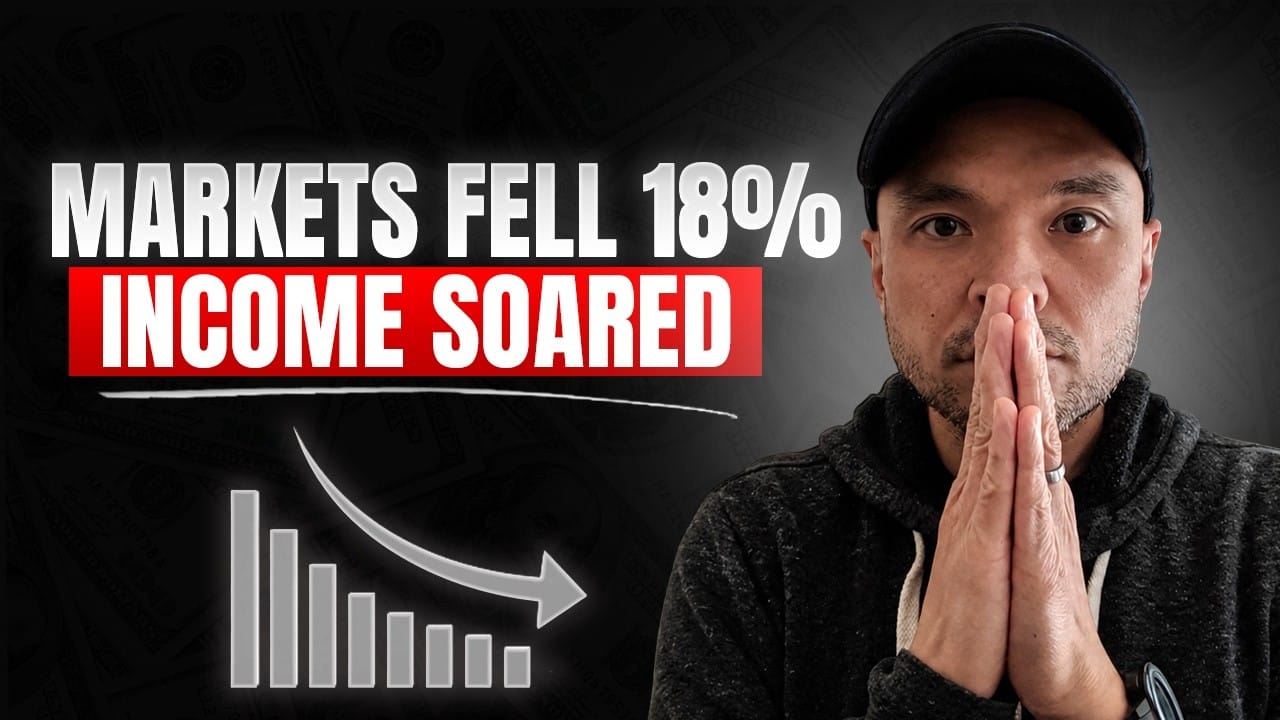
Market downturns make many investors nervous, especially those relying on investments to generate income.
One of the most common questions income investors ask is: If the market crashes, does my dividend income disappear too?
The answer depends entirely on how your ETF generates income. While traditional dividend investing relies on company profits, many modern income ETFs use a completely different engine—one that often benefits from higher market volatility.
Income ETFs Don't Generate Income Like Traditional Dividend Stocks
Many investors assume all investment income comes from corporate dividends.
That's true for companies like Coca-Cola, Pepsi, or Verizon, where shareholders receive a portion of company profits.
However, many popular income ETFs—including funds such as QQQI, SPYI, and CHPY—generate most of their distributions through options premiums, not dividends.
Here's the basic idea:
The ETF owns a portfolio of stocks.
It sells options against those holdings.
Investors pay premiums for those options.
Those premiums become the cash distributed to shareholders.
Rather than relying primarily on corporate earnings, these funds generate income by selling market participants the right to buy or sell securities under specific conditions.
Why Volatility Can Increase Income
This is the part many new investors don't realize.
Option premiums aren't determined by company profits—they're driven largely by uncertainty.
When markets become more volatile:
Investors seek more protection.
Demand for options increases.
Option premiums become more expensive.
Income ETFs can collect larger premiums.
During calm bull markets, option premiums tend to shrink because there is less uncertainty.
During turbulent markets, premiums often rise substantially because traders are willing to pay more for downside protection or speculative opportunities.
This is why falling markets don't automatically mean falling income. In some cases, increased volatility can actually support or increase ETF distributions.
What Happened During the 2022 Bear Market?
The 2022 market decline provides a useful example.
While the S&P 500 suffered one of its worst years in recent history, option-income ETFs continued producing monthly distributions.
Although ETF share prices declined alongside the broader market, the option strategies continued generating income because:
Trading activity remained strong.
Market volatility surged.
Higher volatility increased option premiums.
Instead of relying solely on stock appreciation, these funds continued producing cash flow through their options strategies.
This highlights one of the biggest differences between growth investing and income investing:
Growth investors may be forced to sell shares during downturns to generate cash.
Income investors can often continue collecting distributions without selling their investments, allowing them to wait for markets to recover.
Why Many Investors Let ETF Managers Handle the Strategy
Selling covered calls or cash-secured puts yourself isn't impossible—but it requires significant time and ongoing management.
Managing an options portfolio involves:
Monitoring positions regularly
Rolling contracts before expiration
Managing assignment risk
Adjusting strike prices
Tracking multiple expiration dates
Large fund managers such as JPMorgan, NEOS, and others perform these tasks at institutional scale.
Instead of managing hundreds or thousands of option contracts yourself, investors simply own shares of the ETF while professional managers execute the strategy and distribute the resulting income.
For many investors, the convenience outweighs the management fees built into the ETF's expense ratio.
Final Thoughts
Market downturns don't automatically eliminate income from option-based ETFs.
Unlike traditional dividend investing, these funds generate much of their cash flow from options premiums, which often become more valuable during periods of elevated volatility.
That doesn't mean these investments are immune to falling prices—share values can still decline along with the broader market. However, the ability to continue generating distributions without selling shares can make them appealing for investors who prioritize cash flow over maximum capital appreciation.
Understanding how these funds work is essential before investing. Income strategies involve trade-offs, including capped upside, market risk, and varying distributions. But for investors seeking regular income through different market environments, knowing where that income comes from can make all the difference.
Book Flash Coaching Call Now.

Subscribe
Get early access to motivational emails, new content, and courses as soon as they arrive. I promise I won't send you anything else.


Contact Us
Feel free to get in touch with me at rico@riconasol.com
or book some time for us to chat by clicking here. Rico also coaches the greater Las Vegas and Henderson areas.
Open Hours
Mon - Fri: 9 AM – 6 PM
Saturday: Closed
Sunday: Closed
Location
Henderson, NV 89052
Email: rico@riconasol.com
Telephone: +1.702.900.7426

"Messy action is better than no action at all..." -Rico Nasol

Disclaimer: The Freedom Builder Bootcamp is for educational purposes only and does not constitute financial, investment, tax, or legal advice. Rico Nasol is not a registered investment advisor. All examples of specific funds or holdings are illustrations of the instructor's personal approach to his own money and are not recommendations. Investing involves risk, including possible loss of principal. Past performance does not guarantee future results. Consult a licensed professional before making investment decisions.
All Rights Reserved | Copyright Rico Nasol 2026 | Privacy Policy | Sitemap